Monday, May 18, 2015

Leading to the Civil War

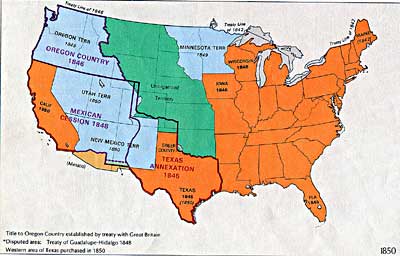
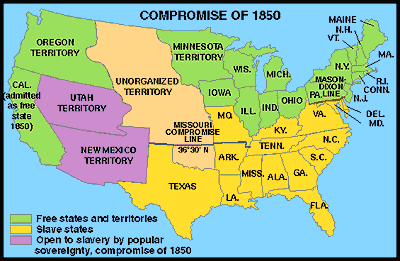
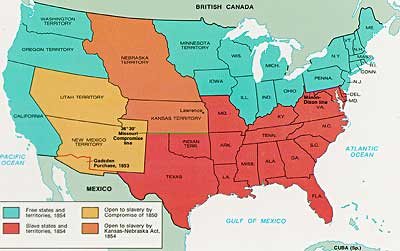
Missouri Compromise (1820)- regulated slavery in the Western territories.


Wilmot Proviso (1846)- banned slavery in any territory from the Mexican War.


Compromise of 1850- slave trade was abolished in Washington, D.C.


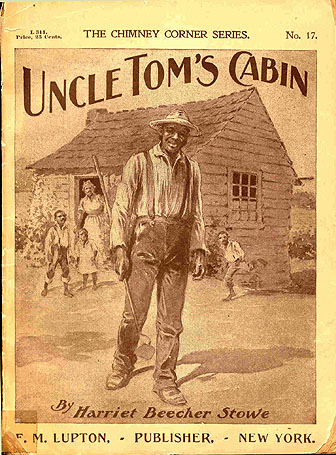
Uncle Tom's Cabin (1852)- a book about slavery, wrote by Harriet Beecher Stowe


Kansas-Nebraska Act (1854)-  allowed white male settlers to determine popular sovereignty.


Monday, April 27, 2015

Frederick Douglass Bio

Frederick Douglass, born February 1818, was an African American abolitionist who escaped slavery and fought for equal rights freedom.


Quotes:


"The fact is, ladies and gentlemen, the distance between this platform and the slave plantation, from which I escaped, is considerable- and the difficulties to be overcome in getting from the latter to the former, are by no means slight.


Frederick is saying how it will take a while for African American slaves to gain freedom.


"What, to the American slave, is your 4th of July? I answer: a day that reveals to him, more than all other days in the year, the gross injustice and cruelty to which he is the constant victim.


He means that although 4th of July is celebrated because of freedom, slaves don't have their freedom yet and consider the day to be injustice.


"...I see the bleeding footsteps...on the way to the slave-markets, where victims are to be sold like horses, sheep, and swine..."


Frederick says this because slaves were considered as property and were sold like they were nothing.


"An American judge gets ten dollars for every victim he consigns to slavery, and five, when he fails to do so..."


He's basically saying that the Fugitive Slave Law is not right since judges are getting money.


"The arm of the Lord is not shortened, and the doom of slavery is certain."


Frederick has confidence that slavery will end by saying this.


Frederick Douglass


Thursday, April 16, 2015

Abolitionist and Woman's Movements

Frederick Douglass wrote his speech about slavery in America since he was a slave at the time. He described how slaves were considered as property ad were sold like animals. Abolitionists tried to help slaves but slaves were often killed if they didn't obey orders. In order for them to gain freedom, they would have to risk to escape to the North. Slaves were black and were mistreated due to color/race. They were forced to work under harsh conditions and were feed little food. During 4th of July, Frederick said that it wasn't an independence day because there wasn't freedom.

The other speech was about Women's Right's. Women were expressing that there was inequality between them and males. Women were free, however they had limited rights such as no voting, etc. Nobody besides women tried to help them gain their rights back. Women were mistreated because of gender.


Both speeches have a few similarities. Women and slaves were fighting for freedom because their rights were restricted from them. Also, their education was denied as well as voting rights.

Monday, February 23, 2015

Transcendentalism

                     Transcendentalism is a social movement that developed around 1836 in New England, in reaction to rationalism. The main figures of this movement were Henry David Thoreau and Ralph Waldo Emerson. Being influenced by Kantian philosophy, romanticism, and Platonism, it taught that holiness fills all nature and mankind. The members of this held developing views on feminism and mutual living.


2 Quotes from Ralph Waldo Emerson:


This quote is significant because having a positive attitude and being happy will give you better effort towards things, but  being negative will not make you try your best.


This quote is significant because by trying new things you will open yourself to man opportunities and that way you learn new things. Not learning = not growing.


2 Quotes from Henry David Thoreau:


Following your dreams that you like will make you succeed better than not becoming who you want to be.


Books are only defined as to what they talk about, not what they look like.


Sunday, February 22, 2015

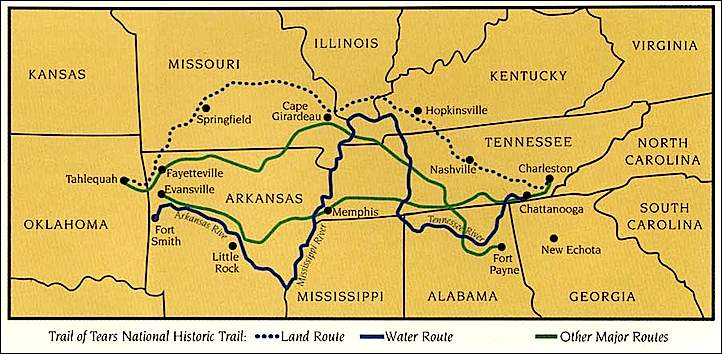
Trail of Tears

                         The Trail of Tears was a series of forced re-locations of the Native American tribes in the US along with the Indian Removal Act of 1830. The tribes such as the Cherokee, Seminole, Muscogee, and many others had to move out of their homelands and journey west of the Mississippi River to a designated Indian Territory. However, the Indian nations did not want to tie brotherhood with the American Society but the Americans decided to do so.

                         The Indian Removal Act was passed in 1830 of May, 28 by the Congress. This was passed under the presidency of Andrew Jackson and was a purpose to negotiate with the tribes in order to obtain their ancestral homelands. Many tribes where affected by this and it was great pressure for the Natives to journey outward.

                          The Black Hawk War broke out between the US and the Native Americans. This started in 1832 and was a conflict lead by Black Hawk who was a Sauk leader. The war occured just after the Natives crossed the Mississippi and where about to venture to the federal territory for their stay.

                           The Second Seminole War, also referred as the Florida War, happened in 1835 and ended in 1842 in Florida. This war started because the Seminoles weren't happy about giving up their lands so they created a conflict towards the United States.


Trail of Tears Map

Quarter 3 Blog Reflection

1. My best post was probably my first 2 because I put a lot of effort into it and I felt that I did good for doing a blog for the first time.

2. I would rewrite the Tecumseh Speech paragraph blog because I didn't fully complete it which made me get a 2 instead of a 5.

3. I'd have to say that my blog look average overall. I have most of the blogs posted, except for one that I forgot. I feel that my blog looks nice since I personalized it a bit, and that the pictures on the posts make it look even more better.

4. I like having to do blogs in the computer lab on Mondays because it's different than usual classroom work and technology is so common now that everyone likes going on computers. From doing blogs, I've learned various things such as the US, presidents, treaties, Native Americans, Supreme Court cases, Ferguson, slavery, election day, wars, etc. In my opinion, doing classworkwith computers is much more fun and it's an interesting way of learning.

Saturday, January 3, 2015

12 Years A Slave Blog #3

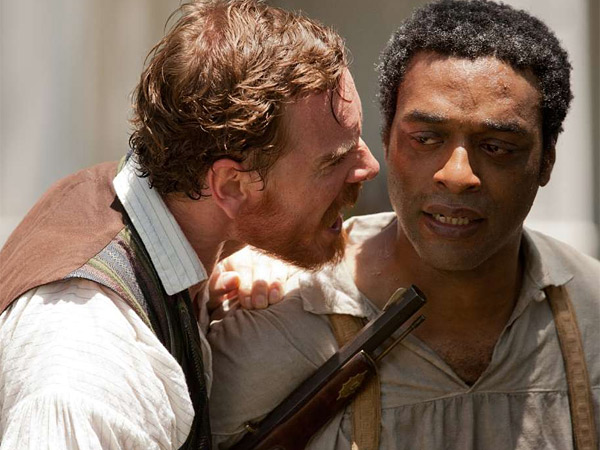
Violence played a vicious role throughout the slave society. The ways that slaves are led to violence are by being tortured and/or killed by white slave owners. The forms of violence are being lashed, being lynched, being shot, etc. In the movie 12 Years a Slave, Solomon as well as Patsey and a few others got lashed by a whip of Master Epps', simply because they didn't either obey his orders or didn't work enough. Epps didn't like Solomon in the first place which set the tone for the rest of the days. No one died from Solomon's group but Pastey was critically hurt after being lashed by Solomon under Master Epps' orders. Having a slave beat another slave was also common back then because owners would be too tired to do so. 

Solomon almost killed by hanging

12 Years A Slave Blog #2

Genders within slaves shapes their experiences in many ways. Men who are slaves typically do most of the hard work and are in harsh conditions. On the other hand, women who were slaves served more like maids of the owners' house because they can clean and do house work more capably than men. Therefore, sometimes women slaves would end up being either raped or becoming a wife due to the fact that many slave owners took those actions. In the movie 12 Years a Slave, men as well as Solomon were working out in the fields in harsh conditions and had high expectations among Master Epps. While they worked, a women slave got the most cotton out of anyone in the group, This made Epps like here more and later on in the film, he basically has sex with her and she ends up having a baby. The gender norm back in the was: men do the hard work, women do the cleaning work.

Pastey, a slave woman

12 Years A Slave Blog #1

Changes in ownership of slaves affects slaves with both their living and working conditions in several ways. There are instances where a group of slaves have a nice owner as opposed to a mean owner and vice versa. Nice owners usually give more opportunities to their slaves and treat them better while mean owners just treat their slaves horribly. In the movie 12 Years A Slave, Solomon Northup is a slave for Master Ford who is a great and caring owner. His living and working conditions are fair and he supports him. Later, after having a fight with Tibits, Master Ford can no longer keep Solomon and transfers him to Master Epps. This master is a mean slave owner and treats his slaves as well as Solomon very poorly, up to the point where you'll get beaten. Solomon having Epps as a Master totally changed the way he did things. He had to pick more cotton every day and the working conditions were harsh. 


Solomon's mean owner: Master Epps

Monday, December 15, 2014

Slave Narrative


Kentucky Narrative, Volume VII


Summary

This slave narrative is about an interview with an ex slave named Dan Bogie. He has a mother and a father named Abe & Lucinda Wheeler. His father was born near Spoonsville and his mother was born in Garrard County. Dan had one sister who was born in 1860 and is now dead. Dan then talks about how he lived in a one room, one bed cabin. Abe was a slave of Talton Embry and his farm joined the Wheeler's farm. Dan also says that he does not remember his grandmother and that he didn't have to work slave days because his parents did most of the work. Food was cooked in an oven in his yard and it would be served around 4 o'clock. Water would be collected in troughs by maple trees. In the winter Dan wore linen clothes, there were 4 slaves, and on Saturdays he would go fishing. 


Reflection

Based on what I've read from this slave narrative, I can conclude a couple of things. The main idea of this interview with Dan Bogie is about his life basically. Back then people were slaves and had to work very hard to live. Dan only had one room for a house and that was what it was like for him back in the day. There was barely any freedom for the blacks and kids didn't have electronics to play with like we do today. Life of slavery was very harsh especially for the blacks.


Monday, December 8, 2014

Tecumseh Speech Paragraph

                           Tecumseh, a Shawnee Leader, gave a speech to the Osages in the Winter of 1811 and presents two themes such as survival and unity. In the speech, he says, "They cannot run fast, and are good marks to shoot at: they are only men; our fathers have killed many of them; we are not squaws, and we will stain the earth with red blood." Tecumseh says this because his men will not fear the white people and do whatever it takes to survive. Also in his speech, Tecumseh says, "We must be united; we must smoke the same pipe; we must fight each other's battles; and more than all, we must love the Great Spirit: he is for us; he will destroy our enemies, and make all his red children happy. He says this because they will take a stand and fight beside each other as one, so that their Great Spirit can make them happy. Throughout Tecumseh's speech, he presents themes of survival and unity to describe his feelings towards the white people and that his men will take a stand against them.


Monday, November 24, 2014

Timeline of Slavery in America

-Slavery began in the 17th century and slaves were moved out of Africa.


-In 1619, the first 20 slaves were shipped to Jamestown.


-By the late 18th century, slaves would pick cotton from plantations.


-During 1793, a cottongin was created to boost production.


-In 1847, Fredrick Douglas saw a newspaper called, "The North Star".


The Supreme Court had a case called the Dred Scott case in 1857.


-Abraham Lincoln was elected as 16th President in 1860.


-March of 1861, 7 states had succeeded the Union.


-In 1862, Lincoln announced the Emancipation Proclamation to abolish slavery.


Sunday, November 9, 2014

Election Day

                                Election Day is on this Tuesday November 4th of 2014. This day is held every 4 years for people to vote for their next President. Election day was determined in the 1800's to be on the first Tuesday of November because farmers/travelers where able to vote at that time. The states that have Election Day as a civic holiday are Delaware, Montana, Ohio, Kentucky, Hawaii, New Jersey, West Virginia, New York, and Puerto Rico.


United States House of Representatives:


Name: Nikki Tsongas

Political Party: Democratic


United State Senators


Name:Edward Markey

Political Party: Democratic


Name: Elizabeth Warren

Political Party: Democratic


Massachusetts House of Representatives

Name: David Nangle

Political Party: Democratic


Massachusetts Senate


Name:Elieen Donoghue

Political Party: Democratic


3 Branches of Government


"Do They Miss Me At Home?"

                                               Dear Family,

                                                             I am writing to you today to tell you about what I'm going through. At this moment, I'm currently located west of the 13 colonies on the Oregon Trail. The reason why I left was because I wanted to move to the Oregon that has free land, large forests, and is free from diseases. Although I'm going somewhere that will give me great opportunities, the journey so far has been rough and harsh. Here's what I've been through.

             I was with a group of farmers that had a small wagon that we put our stuff into. I knew the trip was going to to be long since the whole trail is 2000 miles. I packed whatever I could bring to have with me; flour, bread, coffee, rice, beans, sugar, salt, tools, clothing, etc. The trail began in Missouri and I found myself and my group along with 200,000 others travelers. All of us were desperate so my group started right away once our wagon was ready. It was suggested to bring cash since there were forts along the way to buy food. I only had 10 dollars.

           Along the trail my group went, I noticed a couple of things that stood out to me. One thing that happened was that some people would die from hunger or diseases. Other people such as women would be pregnant and have to give birth off road. It's a horrible sight out here and I'm struggling every minute. I've visited unique places such as the Cumberland Gap. About a couple of days ago, I heard about the tragic tale of the Donnor Party. What happened was that their wagon broke down in the Truckey Pass and lived out in the cold. With little to no food, they eventually turned into cannibalists and died. There were only a couple of survivors to tell the tale.

           So this is the end of my letter. I know you miss me so much and I do too. I hope that everyone back at home are doing well. I don't think that we'll ever meet again so acknowledge that this is the last farewell. My future plans is to basically finish the trail and to end up in Oregon.Thanks for reading this letter.


                                                                                        Sincerely,
 
                                                                                                  Jim


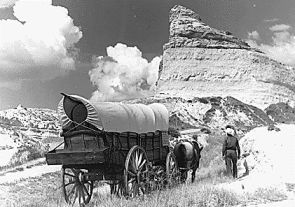
The Oregon Trail

Sunday, October 19, 2014

Lewis & Clark Blog

The Lewis & Clark expedition was the first American expedition to cross the western part of the US. Meriwether Lewis and William Clark led the expedition team in May of 1804 from St. Louis to the Mississippi.


Map of the expedition


May 27th, 1804

Lewis and Clark had 2 canoes filled with deer skin and settled in near the Gasconade River which is 154 yards length.


August 9, 1804

Lewis and Clark found an elk crossing a river and returned near where there boats were camped.


November 29th, 1804

Lewis and Clark discovered that the depth of the snow at the time was 13 inches.


Monday, October 13, 2014

Boston Marathon Bombing (Constitutional Issues)

On April 23rd, 2014, Boston had a terrorist attack during the Boston Marathon. This resulted in 3 deaths and numerous casualties. The bomb was set off my suspects Dzhokhar Tsarnaev and his older brother Tamerlan Tsarnaev. Tamerlan was killed during the time by police and his younger brother Dzhokhar was caught in a boat and arrested. Below are the 5 Constitutional issues that were brought up due to this tragedy.


Miranda Warnings

Dzhokhar taken into custody

The custody of Dzhokhar was taken into place when police forces discovered him in a boat of a nearby backyard. He suffered from severe wounds and was taken to a nearby hospital. There's a debate about the Miranda Rights of Dzhokhar and a trial for him will be in the near future.


Death Penalty

Remains of pressure cooker used as a bomb


A pressure cooker was used as a bomb during the Boston Marathon bombing along with other explosive material. After Dzhokhar was caught, police determined whether or not that he should receive the death penalty as a punishment. The bombs he used were considered as "weapons of mass destruction" and was charged for that matter. Since the bombing took place in the state of Massachusetts, no death penalty can be given unless Federal prosecutors decided to look further more into Dzhokhar's case. Due to investigation still taken action into the whole story, a trial for Dzhokhar will be a while from now.


Guns

Shootout in Watertown moments after the bombing


A shootout occurred several moments after the Tsarnaevs escaped in a getaway car from the bomb scene. This happened in Watertown and Tamerlan ended up being killed by police during the shooting. Due to the brothers firing a ton of bullets at the police troopers, it has been concluded that Tamerlan and Dzhokhar had a ton of ammunition. Shortly before the shootout, the Tsarnaevs shot and killed an MIT officer before escaping in the getaway car. The guns that they were using were unregistered according to police.


Immigration


Tamerlan boxing


The Tsarnaev brother were Russian and immigrated over to the US. While in the states many months before the bombing, they would practice after school sports like boxing and wrestling. To many people, the brothers seemed like good friends. There hasn't been any arrest records of the Tsarnaev's in the past before the bombing incident.


Privacy


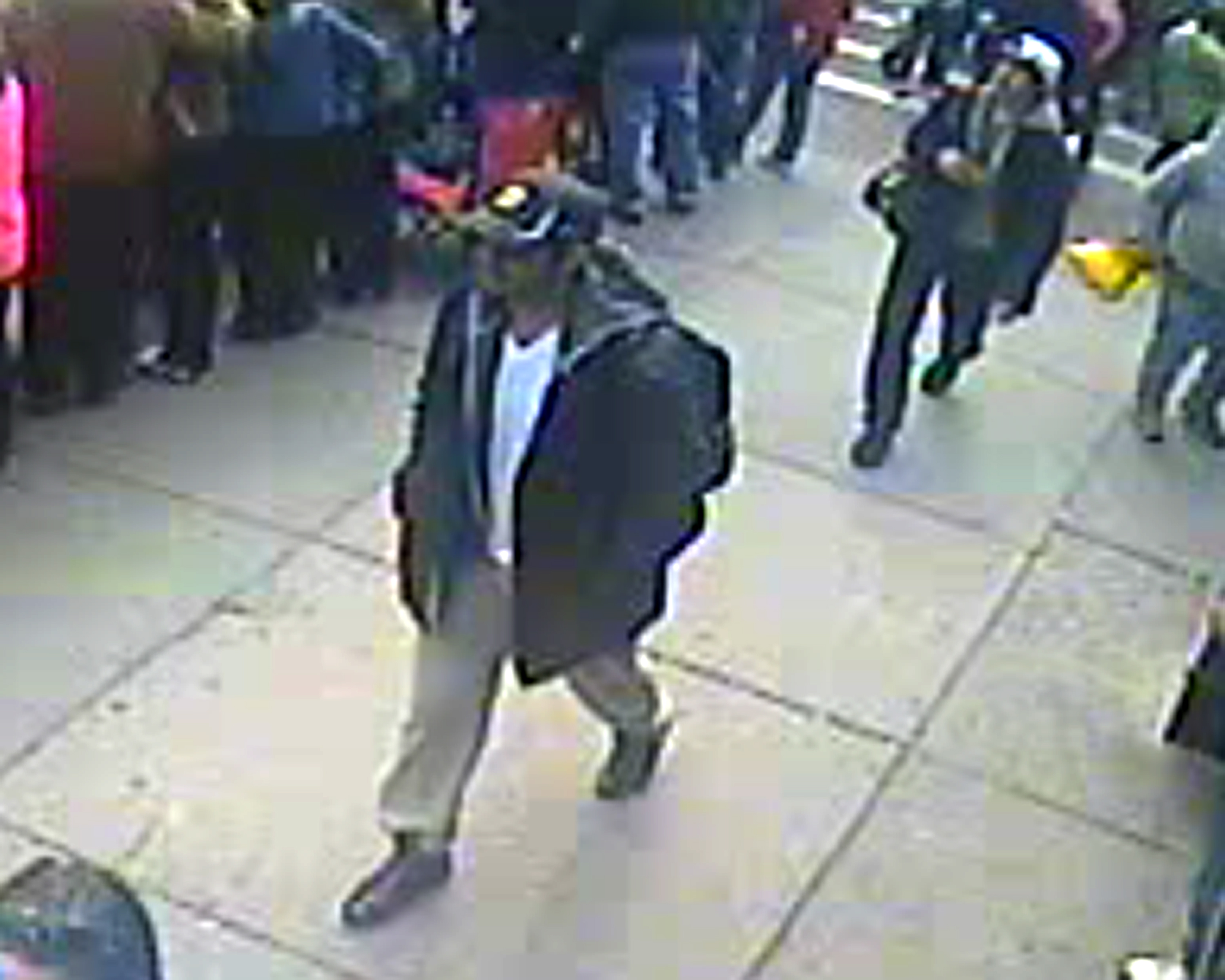
Footage of a security camera showing the Tsarnaevs before the bombing


Thermal photo of Dzhokhar hiding in a boat


Security footage was used to determine the suspects of the Boston Marathon Bombing. Above shows both Tamerlan and Dzhokhar walking before the bomb was set off. There were also shown in security cameras next to where the bomb was set of and when the it exploded. The description of the backpack used to hide the explosives matched with one of the Tsarnaev's backpack. The other picture above shows a thermal photo of Dzhokhar Tsarnaev in a boat on someone's backyard in Watertown. Police used thermal footage to easily see him in the boat since it was dark out. Thermal devices are used mainly for that reason and also for searching for drugs but this was awared to be violating the Fourth Amendment. This amendment is stated for citizens' houses to not be searched using thermal imaging devices without search warrant.


Sunday, September 28, 2014

Compromises Of The Constitution

                 During the Constitutional Convention in 1787, 2 compromises where established within the states. The First compromise was the Great Compromise. This compromise was an agreement that the legislative structure and representation that each state would have according to the Constitution. On May 29th of 1787, a proposal of the creation of the bicameral legislature was stated by Virginia delegate Edmund Randolph. The bicameral legislature allowed both houses of each state to be proportional with its population.  Candidates for the higher house are nominated through the state's legislature while the candidates for the lower house are nominated by the people of each state. This proposal was also called the Virginia Plan and this allowed equality to the people. In the end, the representation of the House issue continued with an agreement for further deliberations which led to the Three-Fifths Compromise.

The Great Compromise

                       Then there was the Three-Fifths Compromise was a debate about whether slaves should be counted in the total population of a state. In article 1 of the Constitution, it says that 3 out of 5 slaves are counted as 1 non-slave person. Northern States wanted the slaves to be counted more than the Southern States did due to taxes paid to the federal government . After the Civil War ended, slavery was abolished. This set all of the slaves free which stopped the compromise. Later, there was the 14th amendment which stated that everyone in the states shall be counted for the representatives.

Three-Fifths Compromise

Sunday, September 14, 2014

Declaration of Independence

*Meanwhile On Twitter*


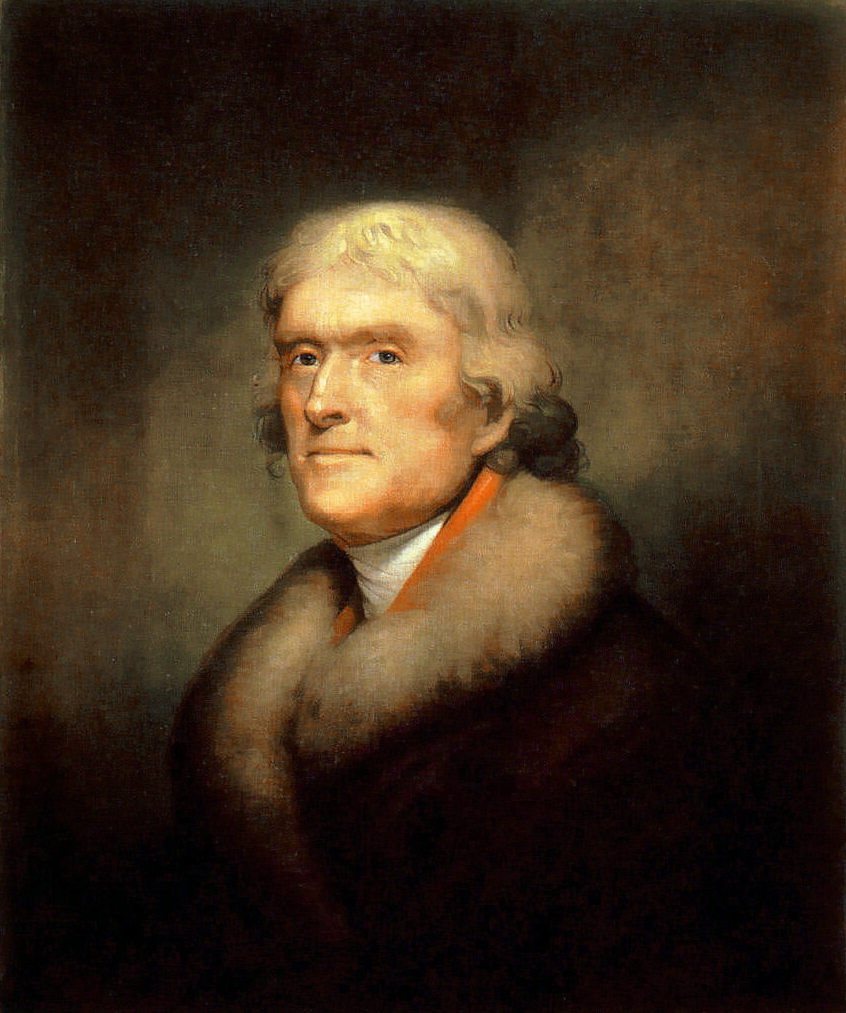
Thomas Jefferson: Yo King George, you awake?


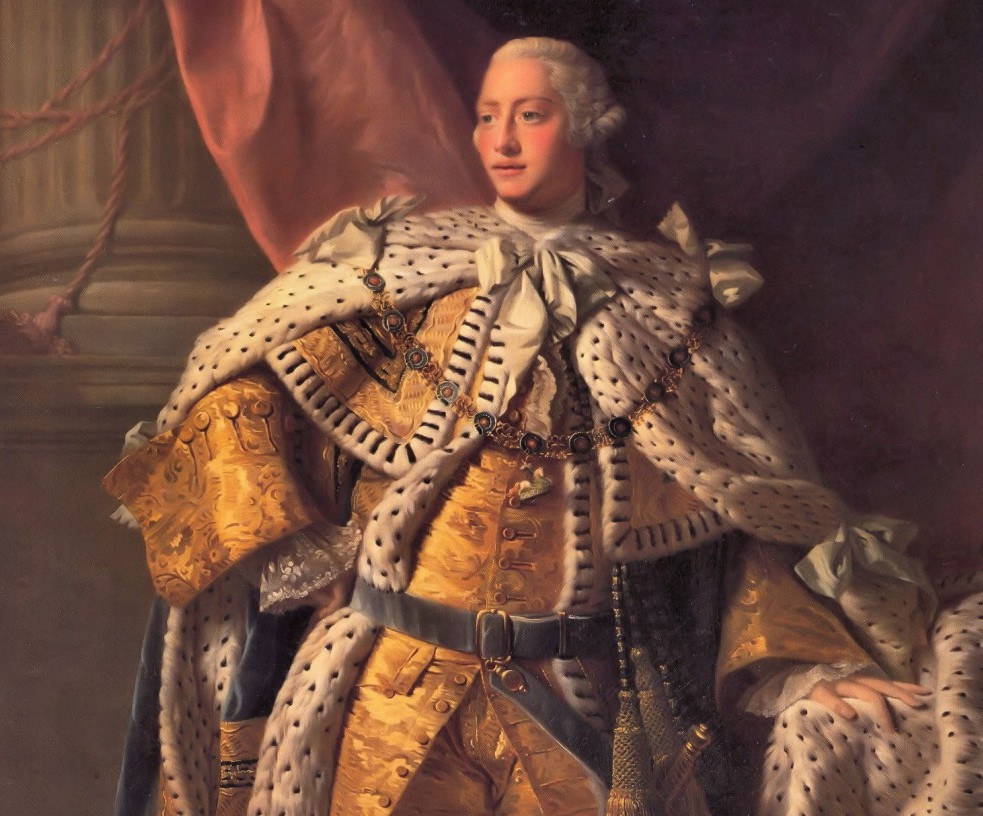
King George III: *wakes up* What?...


Thomas Jefferson: It's me Thomas.


King George III: Oh, your that delegate from the 13 colonies. Pfft, nerd.


Thomas Jefferson: I have something important to talk to you about.


King George III: Speak as you wish patriot, I'm curious as to what you have to say.


Thomas Jefferson: It's regarding to independence.


King George III: Go on.


Thomas Jefferson: I, as well as the 13 colonies, wish to declare our independence from your Empire.


King George III: What makes you people from getting your independence. 


Thomas Jefferson:  We the People have the right to create a new government so we can have security.


King George III: Where's the proof of your statement? Remember Thomas, I'm a King, not a little boy. If you want something done then show me how it will be done. 


Thomas Jefferson: Very well. As I was saying, the right to create a new government is stated in the Declaration of Independence. Also, I have 3 grievances from the 13 colonies that I will show to you.


King George III: What are these 3 grievances you speak of?


Thomas Jefferson: The 3 grievances are the following. In recent years, you have refused the colonists the right to representation. You allowed your British Navy to influence the patriot sailors into fighting against our people as one of your men. Lastly, you closed local Boston ports due to the Boston Tea Party by punishing all, rather than the guilty. 


King George III: These grievances you've mentioned are absolutely true. However, what have you done with these grievances to support your statement.


Thomas Jefferson: The colonies have appealed your decisions, making them open to the public. We've done this by adding the grievances in our Declaration of Independence. 


King George III: It seems that you've been asking for independence a long time now. I've been reviewing all of your appeals and petitions for independence. Well, it doesn't matter. You still won't get your independence!!!

Thomas Jefferson: Well I guess we can't make any agreements anymore!


King George III:  I've had enough of you nonsense! Further connections between Britain and America are over! Good day to you. 


Sunday, September 7, 2014

The French & Indian War

                                                             
                             The French and Indian War, also known as the Seven Year's War, started around 1754. The war took place in North America and was fought between Great Britain and France. Also, the Native Americans parted with the French as allies during the war. The cause of the war occurred when there was an argument of the control of both the Monongahela and the Allegheny rivers. After the dispute between Britain and France, violence broke out into the Battle of Jumonville Glen which happened in May 1754. The results of the war ended in 1763 with a British Victory over France. The British then departed from the colonies and after the war, the Treaty of Paris was signed.


Map of the French & Indian War

More details about the French and Indian War can be found here